

My brain has been spinning since mid-2024; everything seems to be moving at breakneck speed as the world violently jerks from one potentially cataclysmic event to another. At the beginning of 2025, I tried to sit down and think through my predictions for the year. In a post on my Substack titled “2025 is going to be an absolute f**ery in tech.” I predicted:
- Agent-to-agent decision-making: meetings fill up with bots, then the bots start deciding—personal “opinion agents” negotiating with each other, and a marketplace emerging for high-status expert personas.
- The Great AI Price Hike: AI tools are in the classic VC-funded “cheap until you’re dependent” phase; once lock-in hits, costs get shoved onto users and businesses.
- The retreat from globalisation: more “local products for local people”—regulation, bans, and geopolitical friction push companies to build for narrower markets, and hiring starts leaning harder into political/cultural “fit.”
- Neo-Luddites + artisan tech: backlash against AI-generated sludge and “more code, more problems” engineering; the new flex becomes doing less, better—simplicity over novelty.
- A slow tech re-org with less pandering: remote vs office stops being a permanent argument and becomes a sorting function. Companies and workers churn until people end up in environments that match them—messily, with redundancies and firings, not vibes and empathy theatre.
I don’t think I was too far off the mark. Let’s review them point by point.
Prediction: Agent-to-agent decision-making.
In the original prediction, I suggested meetings would quickly turn into swarms of AI agents turning up in people’s places — and that we’d start letting those agents make the small, boring decisions that usually waste our time.
A few months after this prediction, in April Google released their Agent2Agent protocol publicly at their Google Cloud Next event, pushing the concept to the forefront of people’s minds.
Additionally, PwC released their agent OS in March that promises to “seamlessly connects AI agents, regardless of platform or framework, into modular, adaptive workflows”
Some “evidence” exists for the fact that note-taker-only meetings have happened:
Being the only human on a Zoom call with AI agents | Illai Gescheit posted on the topic | LinkedIn
At the AAAI 2025 Workshop on Advancing LLM-Based Multi-Agent Collaboration (catchy), researchers from Hitachi America presented Reliable Decision-Making for Multi-Agent LLM Systems. They explore how aggregating multiple agents’ outputs might improve accuracy and reliability. The results are pretty inconclusive, but the paper is a good signal: people are taking agent-to-agent decision-making seriously and investing in it.
Summary: There’s some evidence this is starting to happen, and there’s definitely traction — but I (as expected 😅) probably overstated the real-world impact in 2025. A few big corporations investing in the space doesn’t prove a broad need (yet). Still, I think agents handling the smaller decisions that would otherwise bog down meetings will become normal. Maybe 2026?
Prediction: The Great AI Price Hike.
I warned that the era of ultra-cheap AI services (fuelled by VC-subsidised loss-leader pricing) would end. Running large AI models is computationally expensive, so either those costs would drop or, more likely, providers would hike prices once users became dependent. I expected significant cost increases for end users of AI by 2025.
Over 2025, all of the large “prosumer” and enterprise products started to rate-limit and push users towards €100+/month subscription models. Claude introduced Max Plans for power users (especially of its Claude Code product), OpenAI’s ChatGPT product now has a €229/month Pro option, and Google’s higher-end subscriptions also come in at over €200 a month. All of these companies have kept a free option, but limited the amount you can do on them.
Many “reseller” AI products that rely on other models have shifted from free or monthly subscriptions to token-based pricing to pass costs directly to end users. At the beginning of the year, Cursor was heavily promoting its $20/month subscription with generous usage limits; it now mainly promotes its Pro+ Package at $60/month and also offers a $200/month option.
This article from August 1st (coincidentally, my birthday) covers well what has happened. The True Cost of AI in 2025: What Businesses Need to Know
Summary: I’m pretty happy with this prediction, even if it was a fairly obvious one to spot. It played out pretty much exactly as I expected. I think pricing has levelled out for now — and as the underlying costs of “making AI” keep dropping, we might even see a bit of a reversal. Competition is starting to look real.
Prediction: “Does Globalisation Work?” or “Local Products For Local People”
I argued that 2025 would force the tech industry to confront the unwinding of globalisation. Cultural and political backlash to the “global melting pot” was growing, with nations seeking to regain control over content and data. I foresaw tech companies having to tailor products to specific regions (or even pull out of some markets) and hiring more for “cultural fit” within a single country. Examples I gave were the U.S. potentially banning TikTok and non-EU companies hesitating to launch AI products in Europe due to regulatory barriers.
In reality, I realise now I completely misunderstood the signals on this one. What I was feeling was not a backlash against globalisation; it was the response to the core lack of trust in AI and the fact it started to — and continued to — completely nuke how online communities validate what’s real.
AI has created an environment where it’s almost impossible to trust anything you read, see, or hear online. THIS is what’s going to cause the push towards more local, and probably offline, communities, not globalisation. I will talk a little more about this in my predictions for 2026 next week.
Prediction: The Rise of the Neo-Luddites and Artisan Tech
I suggested that there would be a growing backlash against the flood of low-quality, AI-generated output (“generative AI is churning out a LOT of crap,” I wrote). As organisations try to use generative AI to boost productivity, they might find that it actually creates more work and bugs (“more code = more problems”). I predicted a renewed focus on simplicity and quality – an “artisanal” approach to tech where doing less, but doing it better, is valued over automated mass production. In short, I foresaw people becoming wary of the hype and preferring proven, simple solutions over bloated AI-generated complexity.
The vibe-coding (a term coined in February 2025) debate RAGED throughout 2025, with many people pushing back against the concept. Interestingly, the idea of “AI Slop” took hold in 2025, showing that the pain I was describing became real.
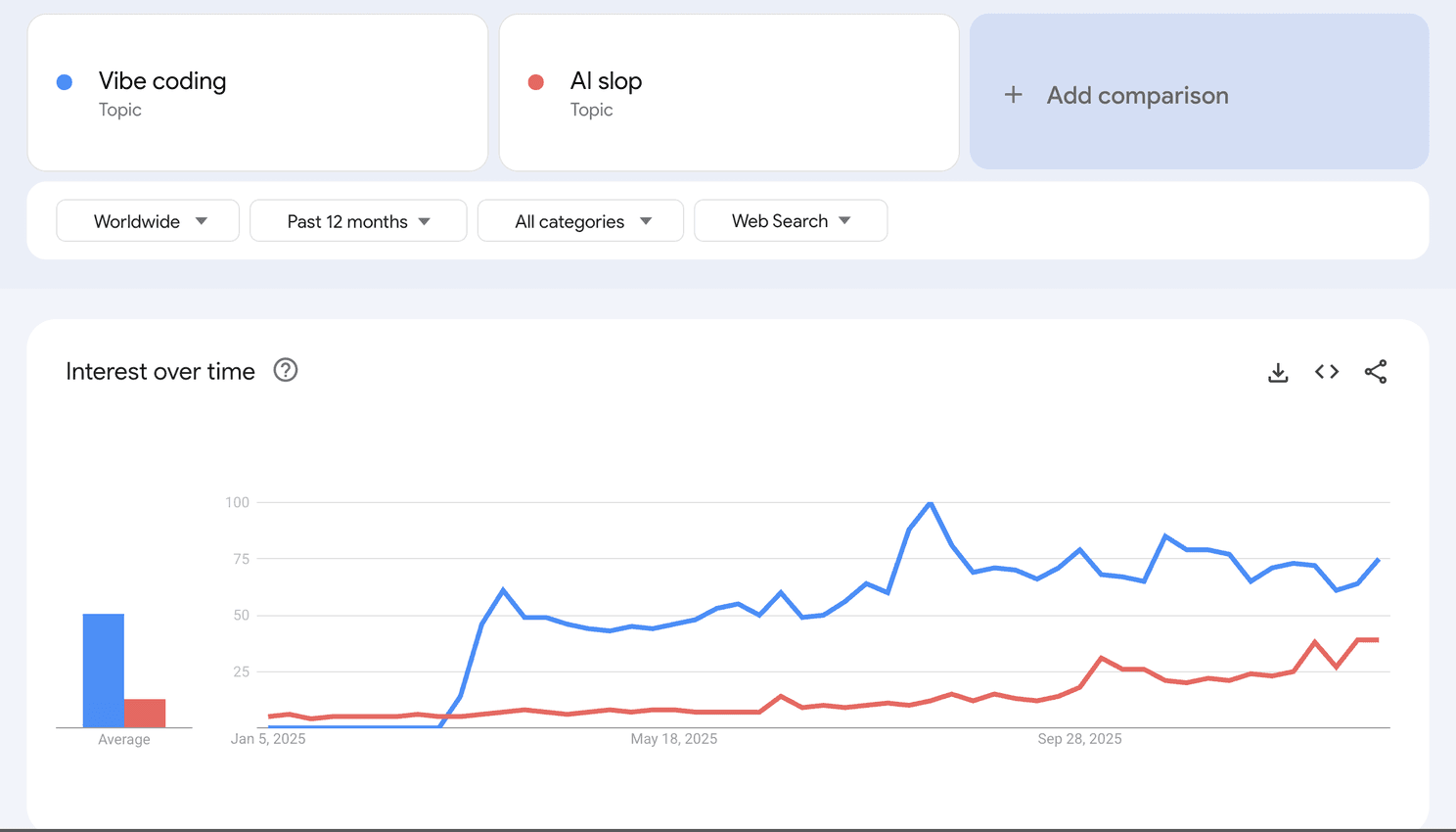
Summary: I was a little early in my prediction about the outcome of this response to the increase in volume of content generated by generative AI, but the pain was definitely felt. My prediction about neo-Luddism and artisan coding might have been a little off. I do think a small section of people are showing this (usually older, less adaptable software engineers). Still, I think we will actually move the other way as an industry completely and move towards a concept of highly-deletable code, but more on that next week.
Prediction: The (Very) Slow Tech Industry Re-org and a Further Lack of “Pandering”
I predicted that in 2025 the tech industry would finally stop endlessly debating remote vs. hybrid vs. office work, and instead reorganise itself. Companies that insist on in-office work would either attract employees who agree or suffer attrition, and companies embracing remote work would likewise solidify their stance. Essentially, firms would sort themselves out – those forcing everyone back to the office would lose folks unsuited to that environment (or fire them), and those fully remote would shed employees who crave an office. Over time, more people would end up at companies that fit their work-style preference, and the mismatch tension would fade. However, I noted this transition wouldn’t be gentle: companies wouldn’t pamper employees’ every wish anymore, and many workers would be fired or pressured out as organisations “get the right people on the bus” for their chosen model. After the easy-money years, I foresaw a more challenging climate with less pandering to tech workers.
I misread the signals on this. The companies’ actions definitely followed my predictions, and things got much tougher for employees in the tech industry. However, the mass movement and re-org that I predicted didn’t happen.
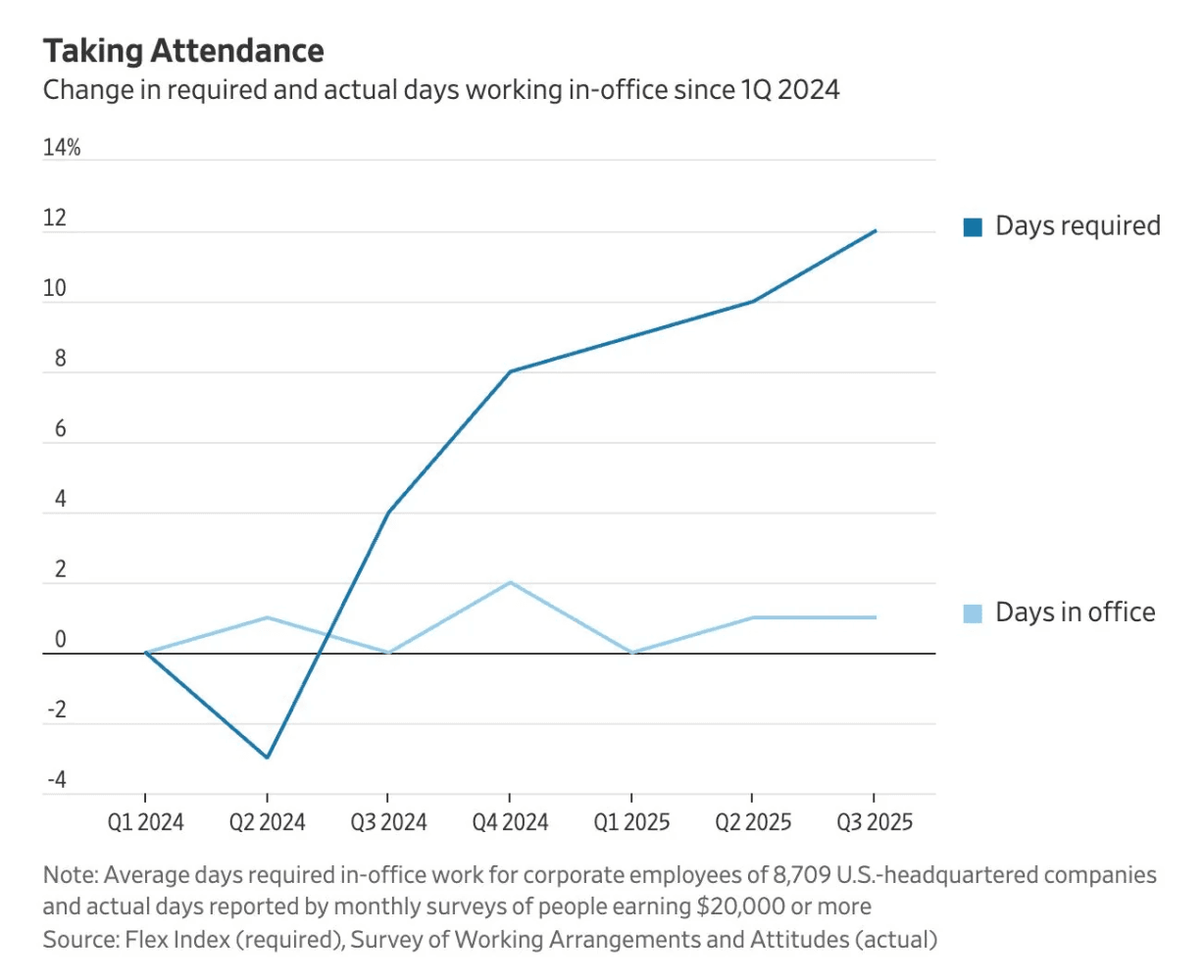
Mostly, people either sat still or lost their jobs and couldn’t find a new one. The market became brutal for tech employees in 2025, something I did predict.
However, I sadly overstated the power tech employees would have to make any change or protest against the company’s actions. AI and other market factors put much more power into the hands of the employers.
Overall, I’m pretty proud of these predictions, and I’m happy that things may not have progressed as quickly as I predicted. Still, I’m sad that my negativity coming into the year was largely validated.
Free Coaching
If my semi-accurate predictions have convinced you I know what I’m talking about, then I’m giving away some free coaching.
I’m trying to build my profile on ADPList, and I need to do 50 hours of coaching before I can start charging there, so currently, there are several coaching options that are 100% free. Check it out here: https://adplist.org/mentors/phil-bennett
Other Things
Since my tech prediction was so miserably inaccurate, I wanted to share some industry and non-industry things that made me feel less miserable in 2025.
- I attended some amazing events in 2025 that made me feel optimistic about people. Shoutouts to LeadDev , LeaderShift Club , Handpicked Berlin and Tech Leadership Exchange for all running inspiring events in 2025.
- Testing Jon Batiste’s Music Knowledge | Track Star* – I think that Jon was put on this earth to help us through these rough times. I was not expecting a Track Star video to bring so much joy and make me cry. Also, this is a delight: Creating Cartoon Sounds with Jon Batiste! | Sounds Good!
- I revisited Thinking in Systems this year, and it really helped me get some clarity on what was going on in the world and how it was impacting my life.
- If you’re a parent (especially a new one) the Parenting Hell Podcast has kept me sane.
Leave a Reply